
Updated November 21, 2026. The most common examples of AI are chatbots like ChatGPT and Gemini, voice assistants like Siri and Alexa, face unlock on phones, streaming and shopping recommendations, map traffic predictions, email spam filters and bank fraud alerts. Many people use AI dozens of times a day without noticing. Tableau cites a survey of 6,000 consumers in which only about a third thought they used AI, while over three-quarters actually used an AI-powered service or device. Here are 40 real examples, grouped by where you'll find them, each with a one-line note on what the AI is actually doing.
For the basics first, read What is AI?
Examples of AI on your phone
Face unlock: recognizes your face from the camera.
Voice assistants (Siri, Google Assistant, Bixby): turn speech into commands.
Predictive text and autocorrect: guess the next word you'll type.
Photo search: find "dog" or "beach" pictures without tags.
Portrait and night mode: AI processes several shots into one better photo.
Magic eraser tools: remove unwanted people or objects from photos.
Live translation: translates speech or text in real time. See how to translate with AI.
Call screening and spam call detection: spots likely scam calls.
Examples of AI at home
Smart speakers (Amazon Alexa, Google Nest): understand questions and control devices.
Robot vacuums: map your rooms and avoid obstacles.
Smart thermostats: learn your schedule to save energy.
Video doorbells and security cameras: tell people apart from cars, pets or moving branches.
Smart TVs: recommend shows and upscale picture quality.
Examples of AI online and on social media
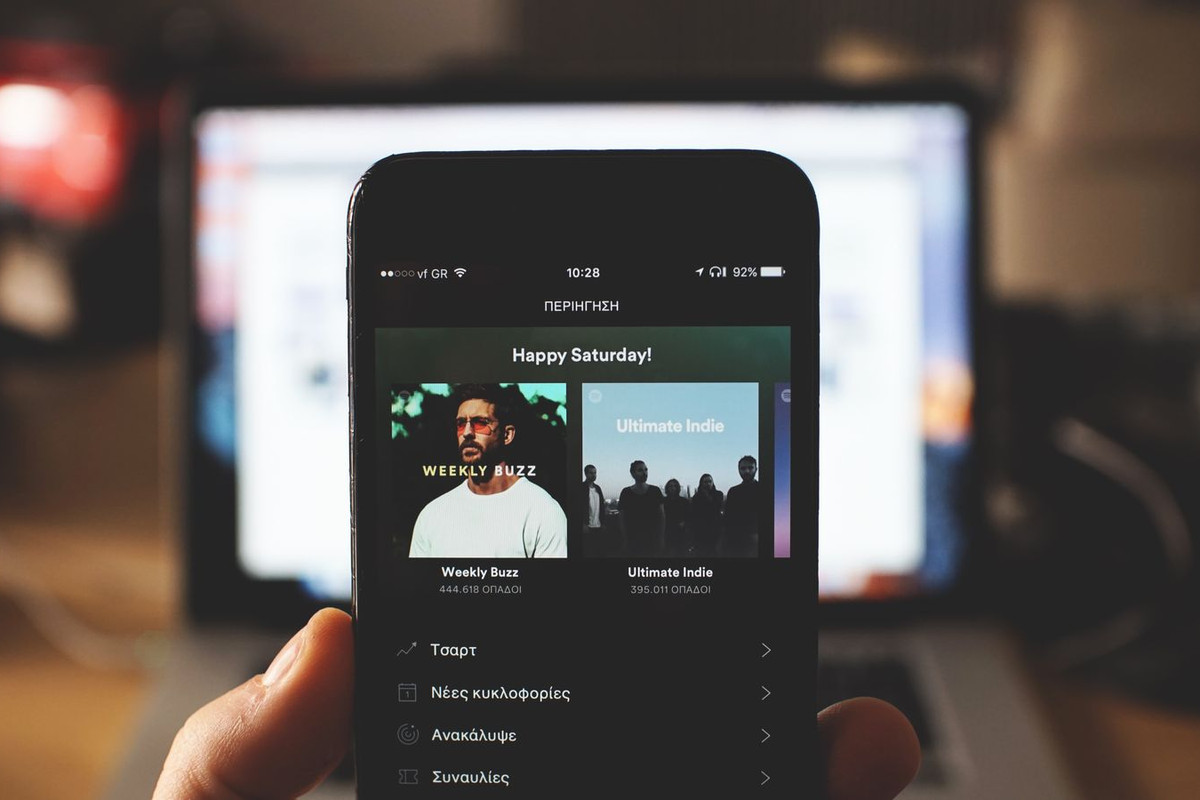
Recommendation feeds (TikTok, YouTube, Instagram, Netflix, Spotify): predict what you'll watch or play next.
Search engines: rank results and, increasingly, write AI answers. You can turn off Google AI Overviews.
Search autocomplete: suggests what you're about to type.
Online shopping: "customers also bought" and personalized deals.
Ads: decide which ads you see.
Content moderation: flags spam, hate speech and fake accounts.
Email spam filters: catch junk and phishing emails.

Examples of generative AI
ChatGPT: writes, explains, summarizes and brainstorms. See how to use an AI assistant.
Google Gemini: Google's chatbot, built into Android and Google Workspace.
Claude: Anthropic's assistant for writing and analysis. See how to use Claude.
Microsoft Copilot: AI in Windows, Word, Excel and Outlook.
AI image generators: create pictures from text. See what is an AI picture?
AI music and voice tools: generate songs, voiceovers and narration.
Coding assistants: help programmers write and fix code.
Examples of AI in cars and travel
Navigation apps (Google Maps, Apple Maps, Waze): predict traffic and arrival times.
Driver assistance: lane-keeping, adaptive cruise control and emergency braking.
Self-driving taxis: services such as Waymo operate driverless rides in some US cities.
Ride-share pricing and matching: match riders and drivers and set prices.
Airline and hotel pricing: adjust prices based on predicted demand.
Examples of AI at work and in business
Meeting transcription and summaries: in Zoom, Teams and Google Meet.
Writing help: grammar, tone and rewriting suggestions. See Grammarly vs ChatGPT.
Customer service chatbots: answer common questions instantly.
Warehouse robots and demand forecasting: keep shelves stocked.
Examples of AI in healthcare and banking
Medical imaging: helps clinicians spot signs of disease on scans.
Clinical note-taking: turns doctor-patient conversations into notes.
Fraud detection: banks flag unusual card transactions in real time.
Check deposits by photo: reads handwriting and numbers from a picture.
Which examples are NOT really AI?
Not everything labeled "smart" is AI. These usually aren't:
A calculator: follows fixed math rules.
A basic timer or alarm: does exactly what it's set to do.
A simple thermostat schedule: follows times you entered.
A vending machine: follows a fixed set of steps.
The test: does it learn from data and adapt, or just follow fixed rules? If it only follows fixed rules, it's automation, not AI.
What do these examples have in common?
Every example above does one of five jobs:
Recognize (faces, speech, objects).
Understand language (chatbots, translation).
Predict (traffic, fraud, demand).
Recommend (videos, products).
Create (text, images, music).
For more on how these jobs are used, see what is AI used for?
Here's how the 40 examples map to those five jobs:
Job | Examples from this list |
Recognize | Face unlock, photo search, security cameras, medical imaging |
Understand language | Voice assistants, chatbots, translation, spam filters |
Predict | Traffic times, fraud alerts, demand forecasting |
Recommend | TikTok, YouTube, Netflix and Spotify feeds, shopping suggestions |
Create | ChatGPT, image generators, AI music and voice tools |
Frequently asked questions
What are 5 examples of AI?
Five common examples are ChatGPT, Siri or Alexa, face unlock on phones, Netflix or YouTube recommendations, and Google Maps traffic predictions.
What is the most common example of AI?
Recommendation systems, such as social media feeds and streaming suggestions, are among the most widely used, along with spam filters and voice assistants.
Is Siri an example of AI?
Yes. Siri uses AI to recognize speech, understand requests and respond.
Is Google an example of AI?
Google uses AI throughout its products, including Search ranking, AI Overviews, Google Maps, Google Photos, Gmail spam filtering and the Gemini chatbot.
What is an example of AI in school?
Students use AI chatbots to explain topics and make practice quizzes, and schools use AI for tools like translation and reading support. See how to use AI to study.
3 tips before you go
Open your phone's settings and look for features labeled AI or "intelligence" so you know where AI is already working for you.
Check the privacy settings of the two apps you use most for recommendations, such as YouTube or TikTok, and clear your history if suggestions feel off.
Use the "learns from data or follows fixed rules?" test whenever a product is marketed as AI-powered.
Related reading
Sources
How we write: see how we test and our editorial policy.
AICYBO is an independent site. We aren't affiliated with OpenAI, Google, Microsoft, Anthropic, Apple, Amazon, Waymo or any other company mentioned.